
Why I Question Christianity
The Genesis of my deconstruction from religion


From a young age, I remember questioning the validity of the religion I was born into. My inquiries were never satisfactorily answered, often met with the phrase, "Because, God." This “god of the gaps” explanation didn’t satisfy my curiosity, yet for some reason, I let it go, stopped questioning, and accepted belief in God.
When I started school, I recall asking my late mother what we believed in, especially since my new friends attended different churches than us. I then accepted that people worshipped God in various different ways, but never pursued the matter further. We went to church on Sundays, I attended Sunday School regularly, and I believed that God was watching over us. In high school, our religious studies class shifted from focusing solely on the Bible and Christianity to include other religions like Hinduism and Islam. Being deeply indoctrinated in Christianity at the time, I wasn’t interested in learning about these other faiths.
Throughout my young adult life, I didn’t think much about religion. I stopped attending church and simply lived my life, however I still believed in God. Conversely, when things didn’t go as planned in my life, I found myself seeking deeper knowledge of religion and God, once again.
For some unknown reason I decided, I needed to delve into religious history - history, a subject I had despised during my school years. But now, it became interesting due to it being a different subject of history and I wanted to know and understand more. This curiosity led to the birth of skepticism within me. Skepticism, at its core, involves questioning beliefs, seeking evidence, and being open to changing one’s mind based on new information. It’s important to distinguish skepticism from cynicism, which often involves distrust and a more negative outlook without necessarily seeking evidence or understanding.
I started looking at what the first form of recorded religion was, which I found most scholars considered it to be the polytheistic beliefs of ancient Sumer, in Mesopotamia, around 3500-3000 BCE. The Sumerians practiced a religion that included a pantheon of gods and goddesses associated with natural elements and forces, such as Anu (the sky god), Enlil (god of wind), and Inanna (goddess of love and war). These deities were worshiped in temples called ziggurats, where rituals, offerings, and ceremonies were performed to honour them.

What I found fascinating was how the Sumerian religion laid the groundwork for the development of religious thought and practice in the region, influencing later civilizations like the Akkadians, Babylonians, and Assyrians. Their religious texts, myths, and hymns have been preserved in cuneiform script on clay tablets, providing valuable insights into their beliefs and practices, and how they influenced other religions.
Sifting through the facts, scholarly consensus, and assumptions, I found it challenging to understand all the facets of religion and reconcile the origins of many faiths, especially given the limited evidence of their beginnings. While some artifacts can be linked to specific religious practices, it is evident that these religions have evolved over time and cannot truly be considered the same as they were around 3000 BCE.
I then turned my attention to monotheistic religions, where I found that the earliest forms of monotheism can be traced to Atenism and Zoroastrianism. Both played crucial roles in the development of monotheistic thought, and their contributions are essential to understanding the evolution of religious beliefs.
Atenism emerged in ancient Egypt during the reign of Pharaoh Akhenaten in the 14th century BCE. Akhenaten, originally named Amenhotep IV, established Atenism as the state religion by promoting the worship of Aten, the sun disk, as the sole deity. This marked a significant departure from traditional Egyptian polytheism, which revered a pantheon of gods like Amun, Ra, and Osiris. Atenism's emphasis on a single, all-powerful god represented a profound change in religious thought, one that was revolutionary for its time.
Akhenaten’s monotheism - some scholars might argue henotheism (worship of one god without denying the existence of others) - was not just a theological innovation but also a political move, centralizing religious power in the hands of the pharaoh, who was seen as the sole intermediary between Aten and the people. Although Atenism was short-lived, lasting only during Akhenaten’s reign, it provided a glimpse into the evolution of monotheistic ideas and demonstrated how rulers could shape and create religious doctrines to consolidate power.
Judaism, one of the oldest monotheistic religions, has a rich history intertwined with the ancient civilizations of the Middle East. Learning this, I began to see how my own faith was part of a much larger, complex history of belief. To fully grasp the origins of Christianity, we have to look at Judaism, and for that, it is crucial to explore the religious landscape that preceded it, particularly what is often considered the first monotheistic religion, Zoroastrianism.

Zoroastrianism, founded by the prophet Zoroaster (or Zarathustra) around the middle of the second millennium BCE, introduced the worship of Ahura Mazda, the supreme god who represented all that was good and just. This faith emerged in ancient Persia (modern-day Iran) and significantly influenced later monotheistic religions, including Judaism and Christianity.
Zoroastrianism’s emphasis on Ahura Mazda as the god of goodness and Angra Mainyu as the embodiment of evil introduced a dualistic worldview that greatly impacted future monotheistic beliefs, particularly the concept of God and Satan. This dualism illustrates how humanity shaped its gods and religions over time.
The roots of Judaism can be traced back to Yahwism, the worship of Yahweh, who was the national god of the ancient kingdoms of Israel and Judah. Yahwism began around the 9th century BCE and gradually developed into the monotheistic faith that became Judaism.
The name Yahweh, which is derived from the Hebrew יהוה (YHWH), is sometimes translated as Jehovah. In many English translations of the Bible, Yahweh is rendered as 'The LORD.' This translation choice reflects both reverence and the historical evolution of the name. 'The LORD' is used in place of the divine name to maintain a sense of sacredness, in line with Jewish tradition where the name Yahweh is considered too holy to be spoken aloud. This practice of substituting 'Yahweh' with 'The LORD' has influenced how many people perceive and refer to the deity in Judeo-Christian traditions, emphasizing the concept of a singular, sovereign ruler.
Initially, Yahwism coexisted with the worship of other Canaanite gods, such as Baal, El, Asherah. However, over time, Yahweh absorbed the attributes of these gods, and the worship of Yahweh alone became more prominent. This shift towards monotheism was solidified during the Babylonian Exile in the 6th century BCE, when many Jews were exiled to Babylon. The experience of exile and the subsequent return to their homeland under Persian rule played a crucial role in shaping Jewish monotheism.
According to Jewish tradition, Judaism was founded by the patriarch Abraham around 1800 BCE. Abraham is considered the first Jew and the father of the Jewish people. The Torah, the central religious text of Judaism, recounts how Abraham entered into a covenant with Yahweh, promising to worship only Him in exchange for becoming the father of a great nation. Yes, the same Abraham from the Bible in Christianity and Ibraham from the Quran in Islam.
The historical roots of Judaism are intricate, deeply embedded in the broader context of the ancient Near East. Over centuries, the religion evolved, shaped by significant historical events and interactions with neighbouring cultures.
A pivotal era in Jewish history was the Second Temple period (539 BCE - 70 CE). After the Babylonian Exile, the Persian ruler Cyrus the Great permitted the Jews to return to their homeland and reconstruct the Temple of Solomon, which had been destroyed by the Babylonians. This period was marked by the consolidation of Jewish religious practices and the development of key texts, including significant portions of the Hebrew Bible.
Judaism's complex history, intertwined with the broader ancient Near Eastern traditions and the emergence of monotheism, paints a picture of a faith shaped by human culture, politics, and evolving beliefs. With this knowledge, it became apparent to me that these religions are all man-made, and that there seemingly is no deity behind them. This realization was a huge shock, as I had been indoctrinated to believe that God is real. How could I reconcile this information with my beliefs?
Although I already didn’t believe that the Bible was entirely accurate, due to being aware that translations involved, the translators interpretation of what they translate and that much of its content was likely passed down through generations via oral traditions before being pen down. How could I simply reject everything I had been indoctrinated with? Surely, there must be more to this. I turned to investigate how the Bible addresses the history I had learnt and started with the first book, Genesis. But first I had to understand the text.
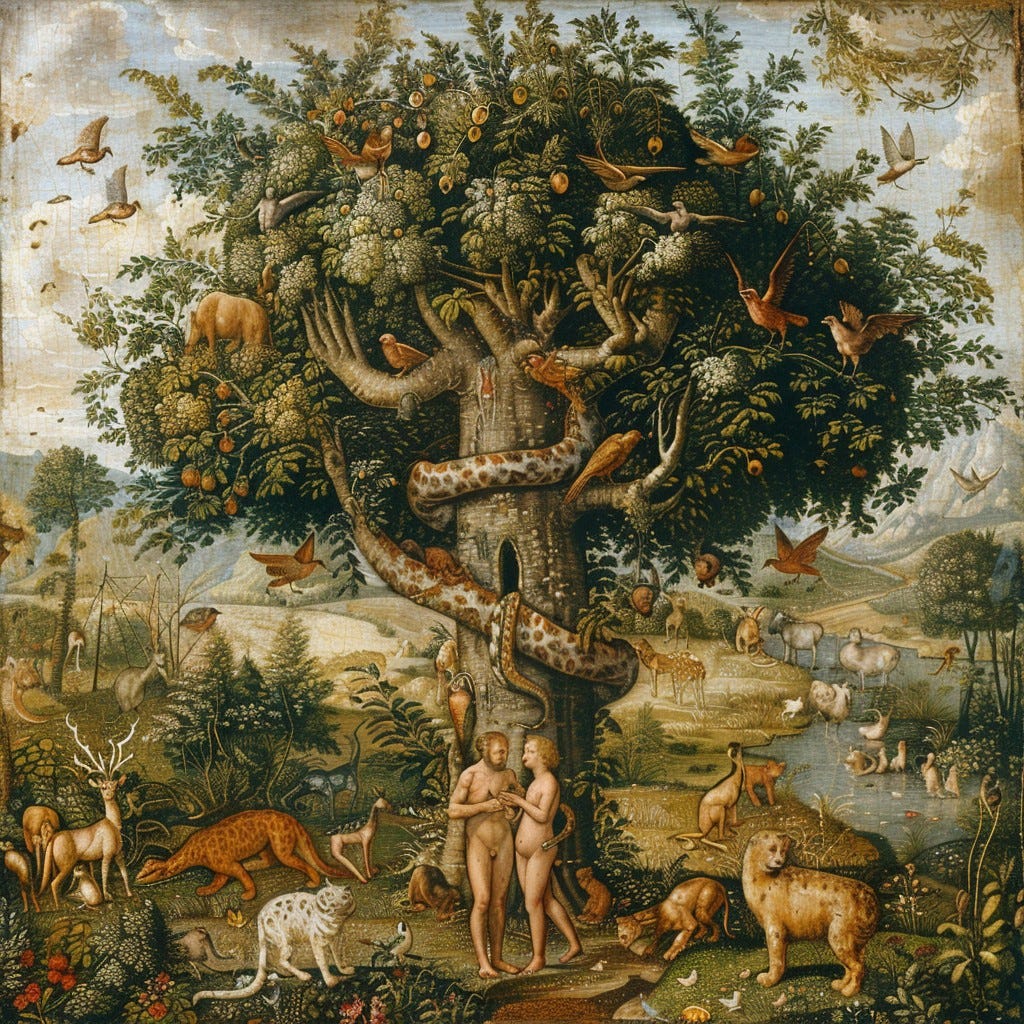
According to Genesis, God created the world in six days, resting on the seventh. The narrative begins with "In the beginning, God created the heavens and the earth," and details the creation of light, sky, land, vegetation, celestial bodies, animals, and finally humans, Adam and Eve.
Science presents a different picture of the origins of the universe and life. The Big Bang theory explains that the universe began approximately 13.8 billion years ago from an incredibly hot and dense state. The formation of stars, planets, and eventually life on Earth followed over billions of years. Evolutionary biology describes the process by which life evolved from simple organisms to the complex diversity we see today over millions of years.
In everyday language, a "theory" often implies a guess or a hypothesis. However, in scientific terms, a theory is a well-substantiated explanation of some aspect of the natural world that is based on a body of evidence and repeatedly tested and confirmed through observation and experimentation. For clarification, I will be using the word theory only in scientific terms and for everyday “theory” I’ll refer to as hypothesis. Theories such as the Big Bang and evolution are supported by extensive and robust evidence, making them foundational to our understanding of the universe. Importantly, scientific theories are not static; they can evolve or change if new evidence and experimentation show different results. This adaptability is a strength of the scientific method, ensuring that our understanding of the world continually improves.
I found several inconsistencies between the Genesis account and scientific evidence. For example, Genesis implies a young Earth, a few thousand years old, whereas scientific evidence shows that the Earth is about 4.5 billion years old. The order of creation in Genesis does not align with the scientific timeline. For instance, Genesis describes the creation of plants before the sun, whereas plants require sunlight to grow. Additionally, Genesis describes the creation of humans as a single event, while evolutionary biology provides evidence of humans evolving over millions of years from common ancestors shared with other primates.
There is also an inconsistency in the two accounts of Creation presented in Genesis. In Genesis 1, God creates plants on day 3, animals on days 5 and 6, and finally, humans on day 6. However, in Genesis 2, God forms אָדָם (Adam, which can be translated as “man” - the first human) from the dust, then creates plants and animals, and finally fashions אִשָּׁה (Ishah - the woman – “out of man”) from Adam's side (or rib) to be his companion. This portrayal suggests that the woman is not a fully independent creation but is derived from and secondary to the man, marking the beginning of the misogyny that runs throughout the scriptures, which I’ll highlight as we proceed.
Genesis is not just a collection of ancient stories; it also introduces significant moral and ethical dilemmas. The narrative of Adam and Eve, for example, has been interpreted by some to justify doctrines about sin and human nature. In Genesis 2:17, it is stated that God warned that if the human ate from the tree of knowledge of good and evil, they would surely die. Yet, Adam lived for another 930 years (Genesis 5:5), which presents a striking contradiction. Some scholars have tried to reconcile this by suggesting it refers to a spiritual death rather than a physical one, or by interpreting the Hebrew word יְוֹם (“yom”) - translated as “day” - to signify a longer period. These interpretations, however, can be seen as attempts to rationalize inconsistencies in the text, revealing deeper questions about the reliability and coherence of these ancient stories.
Additionally, some scholars argue that humans lived to such old ages in the ‘pre-flood’ environment due to factors like genetics, diet, or lifestyle. Personally, I lean toward the idea that these long lifespans are a result of ancient understandings of time—a hypothesis that some biblical scholars also support. While scholars continue to debate the intriguing concept of longevity in these texts, historical research, including studies from Harvard and Cambridge Universities, indicates that the average human lifespan in ancient civilizations was around 30-40 years, largely due to high infant mortality rates, diseases, lack of medical knowledge, and harsh living conditions.
We are then introduced to the figure of the talking snake, that spoke to Eve in Genesis 3, tempting her to eat the forbidden fruit. This element raised significant questions, particularly from a scientific standpoint, as we know that snakes do not possess the ability to speak, challenging the literal believability of the account. Some biblical scholars suggest that this passage could be understood as a parable or allegory rather than a historical event, representing deeper truths about temptation, free will, and moral choice. Others interpret the snake’s role as the tempter symbolizing rebellion against divine authority, or, in modern Christian thought, as a representation of Satan. Despite these interpretations, I ultimately found the story to be a non-literal account, further questioning the plausibility of these narratives.
The story, however, raises ethical concerns. The humans, Adam and Eve, did not know the difference between good and evil before eating from the tree of knowledge. Expecting them to resist temptation under these circumstances seems unreasonable. It’s akin to placing a loaded gun in a room with a child and expecting the child not to touch it. This comparison further illustrates the moral and logical inconsistencies in the scripture.
The narrative of Cain and Abel highlights Gods capricious nature. Cain, driven by jealousy and anger after God favours Abel's offering over his own, commits the first murder in Genesis 4:8 by killing his brother. This act is indeed immoral, but it's important to recognize that the root of this violence lies not solely in human nature, but in the actions of God. By showing preference for Abel's offering, God incites the jealousy and resentment in Cain, setting the stage for this tragic outcome. Rather than guiding Cain away from these destructive emotions or offering any understanding, God responds to Cain's sin by awarding a punishment - exiling him from his homeland and banishing him from His presence. This sentence condemns Cain to a life of lonely wandering, a particularly severe fate given that the scripture does not mention any other humans at this point, suggesting that Cain's isolation would be absolute. The story raises troubling questions not only about the morality of Cain's actions but also about the nature of divine justice and the role God plays in provoking and punishing human flaws.

“Behold, thou hast driven me out this day from the face of the earth, and from thy face shall I be hid, and I shall be a fugitive and a vagabond in the earth; and it shall come to pass, that every one that findeth me shall slay me.” Genesis 4:14.
This phrase implies the existence of more than just the three humans we've been introduced to thus far. The Hebrew word כָּל ("kol") is typically understood to mean "all" or "everyone," suggesting a broader population. After this, Cain goes to the land of Nod, where he finds a wife and starts a family? This raises significant questions, as the Bible does not explicitly mention the existence of other people before this point, leaving readers to wonder about the origin of these inhabitants, and how to interpret the text.
These inconsistencies prompt deeper questions about the literal interpretation of the Bible. If these stories are not factual accounts, what does that mean for other parts of the Bible and the historicity of it? How can I believe that these Scriptures are from God if there are so many inconsistencies and gaps in the information? If God is portrayed so vengeful, should He be worshipped? I found myself grappling with more questions than answers, sensing where this path would lead, yet feeling reluctant to follow it. The realization threatened to shatter my faith, and I wasn't sure if I was ready to face that, but I had to know more….
Sources:
“Who wrote the Bible?” by Richard E Friedman. HarperCollins 1997
“The Bible Tells Me So: Why Defending Scripture Has Made Us Unable to Read It” Peter Enns/ HarperOne, 2015
"Ancient Mesopotamia: Portrait of a Dead Civilization" by A. Leo Oppenheim
"Religion in Ancient Mesopotamia" by Jean Bottéro
"God Is Not Great: How Religion Poisons Everything" Christopher Hitchens. 2007
Articles and Encyclopaedia’s:
"Encyclopaedia of Religion," edited by Lindsay Jones
"Oxford Encyclopaedia of the Ancient Near East"
Online Resources:
The Metropolitan Museum of Art – Met Museum Website.
Thank you Durand. I am in the same boat as you.